A spotlight on data
When data is not working, it rarely looks like a data problem
Most organisations describe the symptoms: slow decisions, conflicting reports, repeated manual work, unclear ownership and improvement work that struggles to deliver.
These are often signs that data is not being managed, governed or used in a way that properly supports the organisation.
Common signs that data is causing problems
Data challenges tend to show up through everyday frustrations that affect reporting, decision-making, operations and improvement work.
Operational symptoms
Decisions take longer than they should
Leaders spend time debating which numbers are correct rather than discussing what the numbers mean or what action to take.
Reports are rebuilt repeatedly
Different teams recreate the same analysis because existing reports are difficult to access, difficult to trust or no longer meet changing needs.
Teams use different definitions
Metrics, categories or operational definitions vary between departments, making comparison and shared understanding difficult.
Important information is hard to find
People know useful data exists somewhere in the organisation, but locating and accessing it often takes longer than expected.
Structural symptoms
Improvement initiatives stall
Data initiatives begin with enthusiasm but struggle to sustain progress once the initial work is complete.
Knowledge sits with a few people
Key reports, datasets or processes depend on specific individuals, making them fragile and difficult to maintain or scale.
Risk concerns slow progress
Uncertainty around ownership, privacy or regulatory obligations makes teams cautious about sharing or using data more effectively.
Investment priorities are unclear
Organisations know improvement is needed but struggle to decide where effort or investment should be focused first.
The issue is knowing where to focus
These signs do not all need to be fixed at once. The important step is understanding which ones are limiting performance most, what is causing them, and where focused improvement will create the most value.
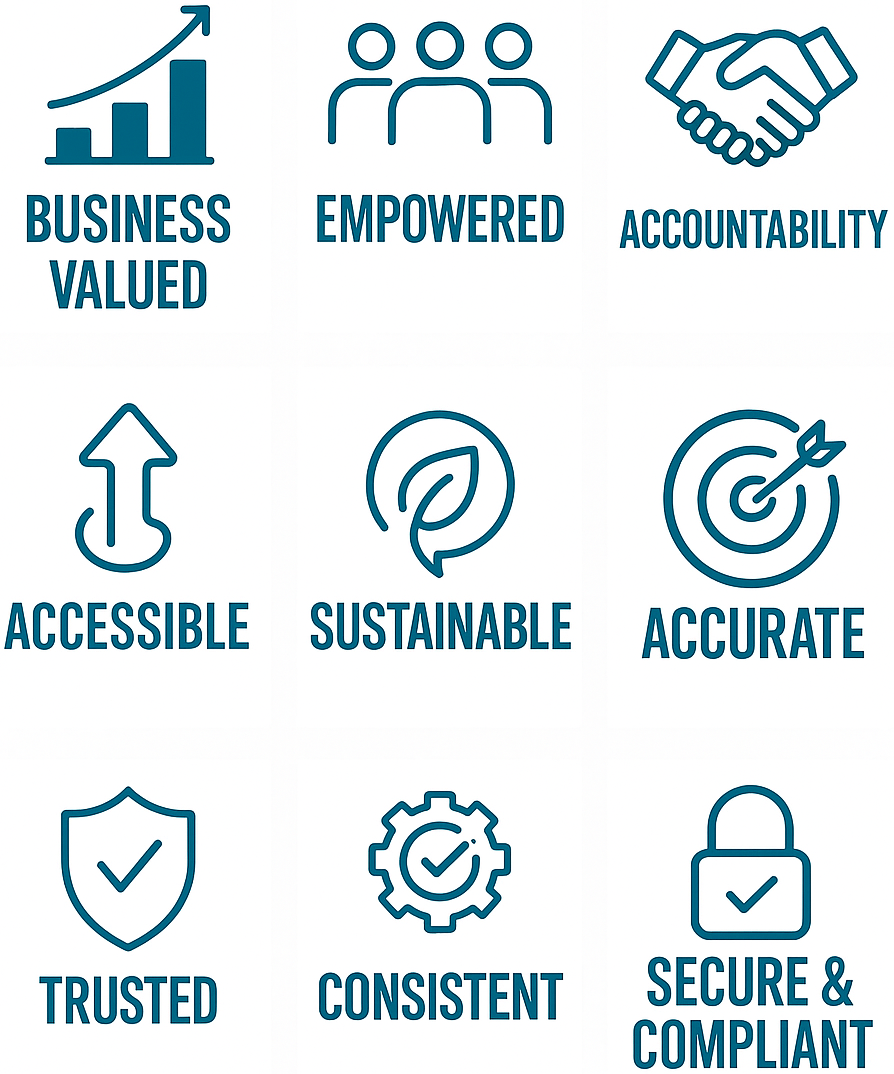
That is why we use the Business Ready Data Principles: not as a theoretical framework, but as a way to understand what needs to be true for data to support better decisions, operations and improvement.
Our Business Ready Data Principles
What good data needs to look like in practice
When these principles are in place, organisations make faster decisions, reduce rework and deliver improvement that lasts.
The principles help identify where data needs to improve so that it can create value in day-to-day work, not just in reports or projects.
| Accurate | Decisions are based on reliable data |
|---|---|
| Consistent | Teams work from shared definitions |
| Trusted | People understand where data comes from |
| Accountable | Ownership is clear across the lifecycle |
| Accessible | The right information is easy to find and use |
| Business Valued | Data is used to drive outcomes, not just reporting |
| Secure & Compliant | Risks are managed without slowing progress |
| Sustainable | Ways of working continue beyond individual projects |
| Empowered | People confidently use data in their day-to-day work |